

Jessica Gámez Spent Years Looking for More Impact. Then She Found Shrimp.
.jpg)
Jessica Gámez spent over a decade in engineering and corporate sustainability, before deciding to work on a cause most people have never considered: farmed shrimp welfare. Now she works at the only organization in the world solely dedicated to improving the lives of the most farmed animal on earth.
Jessica Gámez’s days are filled with meetings with corporate sustainability and seafood sourcing professionals. Her pitch is simple: think about the shrimp.
Yes, shrimp. Around 440 billion of them are farmed every year: five times more than all farmed land animals combined. At any given moment, shrimp make up the majority of animals alive on farms worldwide.
However, Jessica isn’t selling an animal rescue story. She’s making the business case for better welfare: workable, measurable changes that seafood supply chains can implement. That includes moving toward humane slaughter and phasing out practices like “eyestalk ablation”. The goal is simple: better welfare, less suffering, at scale.
So how did she end up on this side of the table?
About a decade ago, Jessica was a corporate sustainability professional herself: similar role, similar meetings, similar position as the people she's pitching today. A challenging and intellectually stimulating career. But at some point she realized her work wasn't making the difference she wanted it to. That realization set her on the path to the most farmed animal in the world.
Want to stay up to date on everything going on in the moral ambition movement? Sign up for our newsletter here.
Making things happen
Jessica grew up in Venezuela, studied chemical engineering, and spent her early career in engineering procurement and construction before using a master’s in Environmental Sciences to pivot into sustainability, mostly focusing on climate change mitigation. While working as a Health, Safety and Environmental engineer in large energy & chemicals projects, she carved her own role from the ground up, starting a sustainability team within her organization before transitioning to a full-time corporate sustainability position, then moving to a second company.
She was good at it, and she knew why: “I like to make things happen and connect people to make things happen.” In sustainability, she was uniquely positioned to do exactly that, pulling together different departments and disciplines to create tangible change.
But even as she advanced on the track that leads to senior project management roles, among the most prestigious in her industry, something didn’t feel quite right.
“I could be having much more impact with the approximately 60,000 hours I have left in my career,” she says. When she tried to picture her life in five or ten years, the kind of work she’d be doing and the impact she could realistically make, it didn’t add up. “I just realized I was climbing the wrong ladder for the path I had envisioned.”
So she took a sabbatical.
One course after another
During that time, Jessica started volunteering with animal welfare organizations, mostly in wildlife conservation. She’d always wanted to start an animal organization of her own. One day, while googling “how to start a high-impact organization,” she found a book by Ambitious Impact (AIM) on building high-impact charities.
She took it to South Africa for her next placement. She spent the days on the field, and evenings with the book. Through it, she found Effective Altruism (EA) and 2024 became, in her words, a “full immersion year.” One learning experience led to the next: an EA introductory course, volunteering for The Mission Motor, The School for Moral Ambition’s Circle Program, a High Impact Professionals Impact Accelerator cohort focused on animal welfare, and the Charity Entrepreneurship incubation program with AIM in early 2025.
Along the way, in April 2024, she took the Giving What We Can pledge: a public commitment to donate at least 10% of her income to effective charities.
“I knew I wanted to transition my career, but I was still figuring out my next steps,” she says. “Taking the pledge meant I could immediately make a tangible impact, while I was still at my corporate job.”
The donation reports, showing exactly how many animals or people her money was reaching, gave her something the corporate world couldn’t quite give her: a direct line between her effort and what it meant to the world.
{{cta}}
Out of survival mode
The Circle Program came to Jessica through the EA community in the Netherlands. When Niki Angyal, our Community Lead, reached out about the first English-language cohort, Jessica joined immediately.
What she valued most was the quality of the people and what they made possible together. “Everyone was questioning their career impact and open-minded about what they might do differently," she says. "That's hard to find when you're in a demanding corporate role, where most of us are in survival mode."
The program gave her structure at a moment when it would have been easy to drift. It helped her develop ideas in stages, with immediate peer feedback from people who challenged her thinking. At that point, she was still in the exploration phase, trying to decide which cause to focus on. The Circle helped her get clearer. The High Impact Professionals course, Impact Accelerator, which pushed her further still.
She also noticed not everyone in the room was aiming for a full career switch. One fellow participant was looking for ways to make their existing role more impactful without leaving it. “There are so many ways to think about increasing your impact,” she says. “The Circle helped me see more of them.”
The connection that eventually led to Shrimp Welfare Project came sideways, as these things often do. After finalizing the Charity Entrepreneurship Incubation Program and while looking for her next opportunity, Sofia Balderson (Co-Founder and Executive Director of Hive) suggested she speak with Aaron Boddy, one of Shrimp Welfare Project’s co-founders — not about a job, just to brainstorm ideas for next career steps.
The conversation quickly became something else: an impromptu job interview. It turned out the organization was looking for two part-time hires: one for corporate engagement with retailers, one for coordinating their Latin America implementation. As Jessica described her background, Aaron said: you are uniquely qualified to do both. One hour later she was in a second interview. Two interviews on a Thursday afternoon. A job offer the following Monday.
“You never know when you’re going to meet the connection that’s going to lead you to the next opportunity,” Jessica says about the experience.
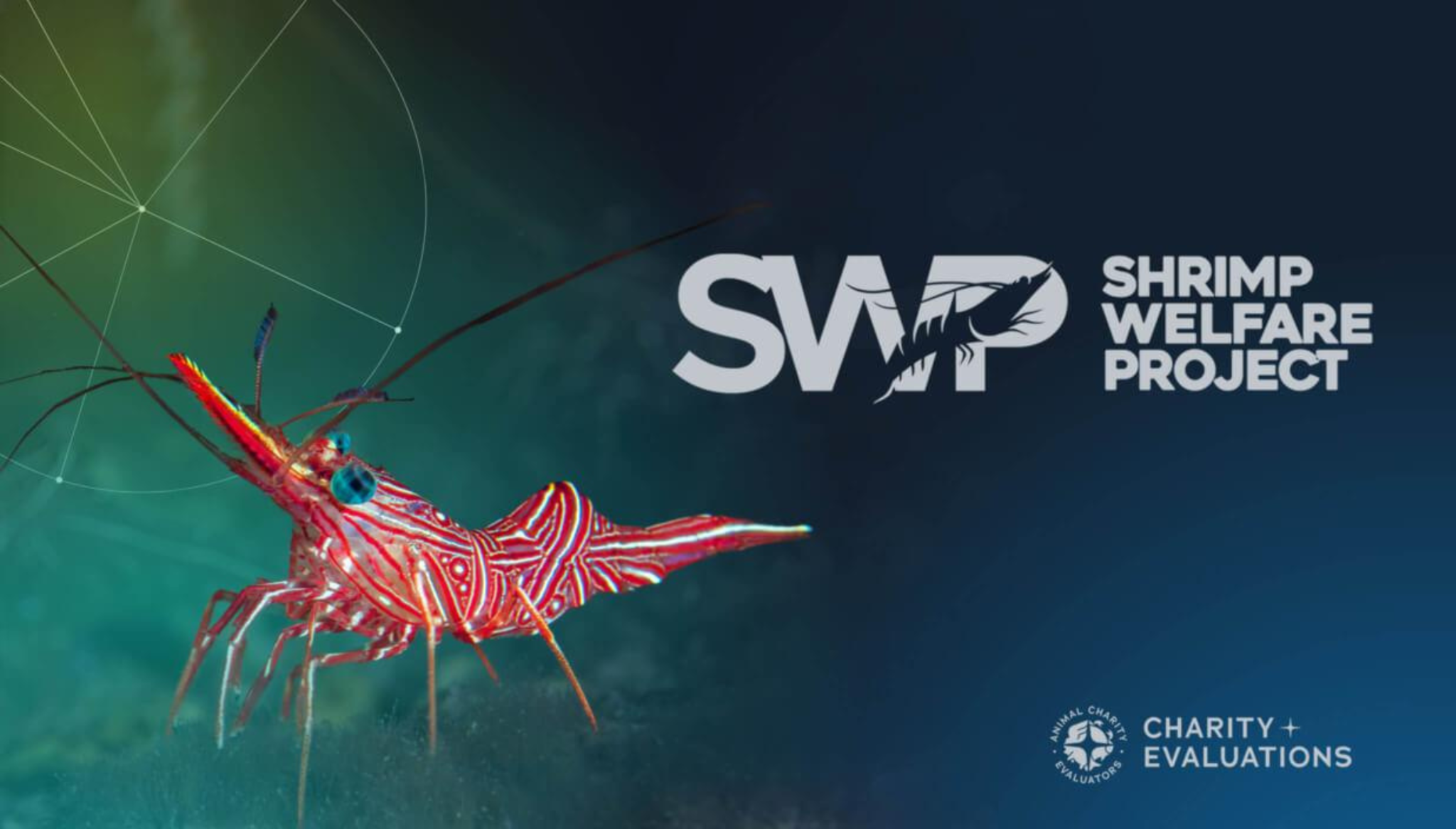
The most farmed animal you’ve never thought about
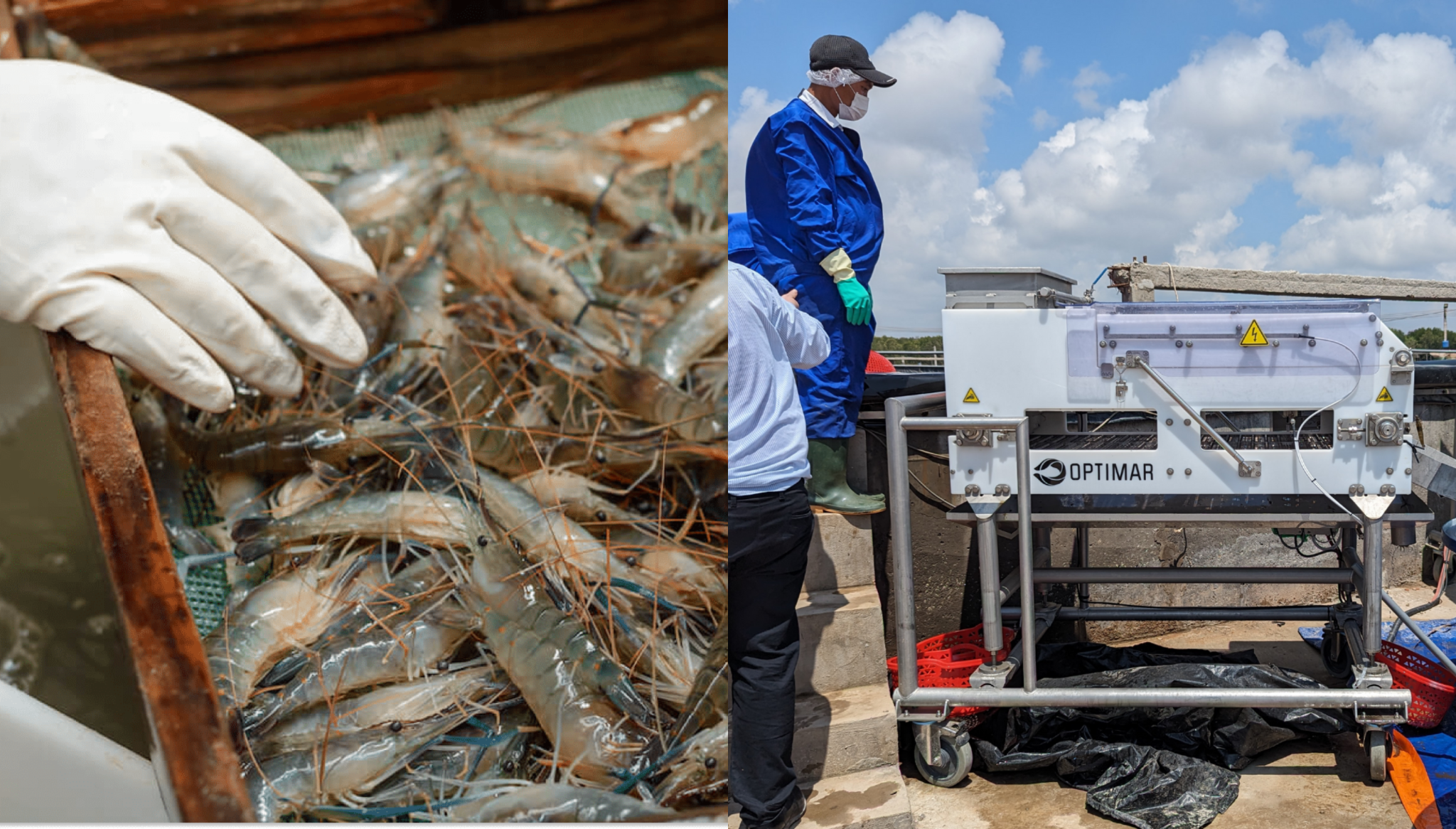
Here is what industrial shrimp farming actually looks like.
Eyestalk ablation, where one or both of a mother shrimp's eyes are cut or crushed, is commonly used to make them breed faster. At harvest, shrimp are usually killed in ice slurry or left to suffocate. Depending on the conditions, it can take several minutes for them to lose consciousness and die, and longer when the water isn't kept cold enough.
Half a trillion animals, every year. And until Shrimp Welfare Project was founded in 2021, no organization in the world was working solely on this.
“I used to feel that my impact was capped.”
The organization's core program is the Humane Slaughter Initiative, which aims to integrate electrical stunning (a pre-slaughter method) as part of farms’ harvesting processes. Electrical stunning is a proven method that renders shrimp unconscious within one to two seconds before slaughter, so that unconsciousness persists until death (with ice slurry being the killing method). Shrimp Welfare Project provides the equipment for free, along with installation, training and ongoing support, on the condition that producers commit to stunning a minimum number of shrimp per year. That minimum threshold is how impact gets measured and how cost-effectiveness is secured.
Beyond slaughter, Shrimp Welfare Project helps move the broader industry toward higher-welfare standards. The team is expanding its scoping work into new geographies, including China, to identify fit-for-purpose interventions across different production models, while also exploring what welfare initiatives could look like beyond aquaculture, including wild-caught shrimp contexts.
Uncapped impact
Jessica’s role is to make this transition happen at scale. She starts with retailers and seafood suppliers, helping them elevate welfare standards across their supply chains and identify producers to work with. In most of her conversations, she is engaging with corporate sustainability and seafood sourcing teams: professionals with similar roles as she previously had, although in a different industry.
“It feels very relatable,” she says. “I’ve seen firsthand how complex it can be to balance cost, quality, and sustainability.”
In her current position, she works closely with seafood industry players to build partnerships that make shrimp welfare a practical part of that equation, not an added burden.
Every skill she built in her corporate years turns out to be directly transferable: supply chain knowledge, stakeholder coordination, the persistence to drive change in complex ecosystems. She’s making the same kind of tangible, measurable progress she always loved. Just without the ceiling.
“I used to feel my impact was capped,” Jessica shares. “Now we have half a trillion farmed shrimp to help.”
Small steps take you far
Jessica is clear-eyed about the fact that her path — a sabbatical, multiple intensive programs, a willingness to start over — isn’t always available to everyone. But she pushes back on the idea that meaningful change requires complete reinvention.
Most of the programs she completed were done alongside her corporate job. The pledge was taken while she was still figuring out what came next.
“Changing your career overnight is not for everybody,” she says. “It can feel huge and overwhelming. But you can take small steps toward something more attainable.”
For professionals who aren't ready to switch careers but want to do something now, she points to the pledge as a place to start: a way to make a measurable, concrete difference while figuring out the next steps. And for those who are ready to explore, her advice is simple: find your people early. The community she found — in the EA world, in the Circle, in the animal welfare movement — gave her encouragement, clarity, and momentum as she figured out what was next.
"Finding that support system," she says, "is something I'd try to do early. It gives you the air under your wings to keep going."
Join the Community
Find events, connect with others, and start taking action.
Heading 1
Heading 2
Heading 3
Heading 4
Heading 5
Heading 6
Lorem ipsum dolor sit amet, consectetur adipiscing elit, sed do eiusmod tempor incididunt ut labore et dolore magna aliqua. Ut enim ad minim veniam, quis nostrud exercitation ullamco laboris nisi ut aliquip ex ea commodo consequat. Duis aute irure dolor in reprehenderit in voluptate velit esse cillum dolore eu fugiat nulla pariatur.
Block quote
Ordered list
- Item 1
- Item 2
- Item 3
Unordered list
- Item A
- Item B
- Item C
Bold text
Emphasis
Superscript
Subscript
Heading 1
Heading 2
Heading 3
Heading 4
Heading 5
Heading 6
Lorem ipsum dolor sit amet, consectetur adipiscing elit, sed do eiusmod tempor incididunt ut labore et dolore magna aliqua. Ut enim ad minim veniam, quis nostrud exercitation ullamco laboris nisi ut aliquip ex ea commodo consequat. Duis aute irure dolor in reprehenderit in voluptate velit esse cillum dolore eu fugiat nulla pariatur.

Block quote
Ordered list
- Item 1
- Item 2
- Item 3
Unordered list
- Item A
- Item B
- Item C
Bold text
Emphasis
Superscript
Subscript